Lot rent is the monthly fee you pay to a mobile home park to keep your manufactured home on their land. It is a cost that millions of Americans pay every month — and it is also one of the biggest financial risks associated with manufactured home ownership in a park. Understanding what constitutes fair lot rent, recognizing ripoff situations, and knowing your rights can save you thousands of dollars and protect your home investment.
This guide breaks down everything you need to know about mobile home park lot rent in 2026.
What Is Lot Rent and What Does It Include?
Lot rent is your monthly payment for the right to place your manufactured home on a specific lot within a mobile home park. The park owns the land; you own the home. Lot rent is essentially a land lease payment.
What lot rent typically includes:
- Use of the land and lot itself
- Common area maintenance (roads, landscaping, lighting)
- Water and sewer in some parks
- Trash collection in some parks
- Access to park amenities if any (pool, laundry, clubhouse)
What lot rent typically does NOT include:
- Electric and gas (almost always billed separately)
- Your home’s property taxes
- Home maintenance and repairs
- Homeowner’s or manufactured home insurance
What Is the Average Lot Rent in the U.S. in 2026?
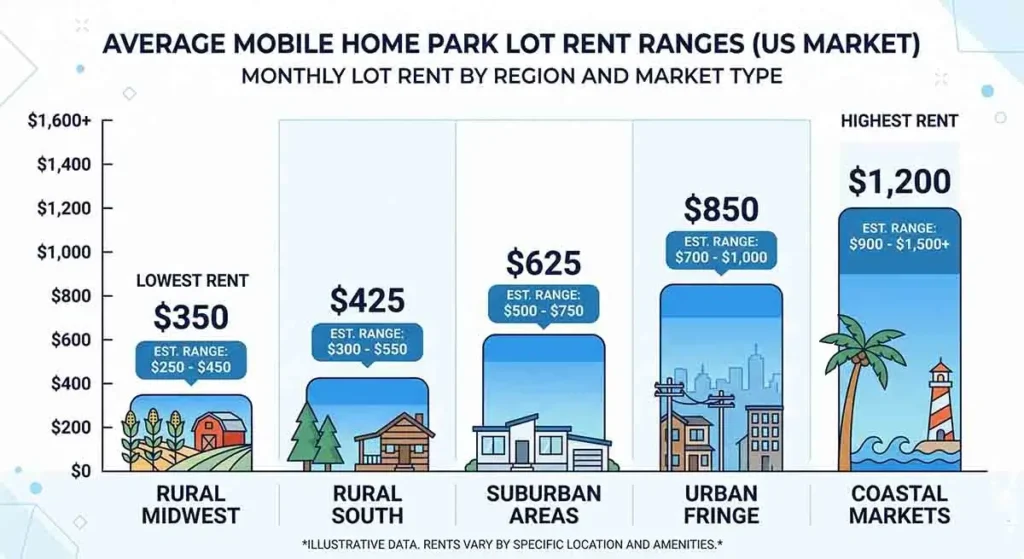
- Rural areas and Midwest and South: $300 to $550 per month
- Suburban areas and mid-sized cities: $500 to $800 per month
- Urban fringe and desirable small cities: $700 to $1,000 per month
- Coastal markets and high-cost areas: $900 to $1,500+ per month
The national median lot rent is approximately $550 to $650 per month as of 2026, but this average is increasingly being pulled upward by aggressive rent increases in many markets, particularly in Florida, California, and Colorado.
What Factors Legitimately Affect Lot Rent
Location
As with all real estate, location is the dominant factor. Parks in desirable areas — near good schools, jobs, shopping, and services — can charge significantly more than parks in remote or less desirable locations.
Park Quality and Amenities
A well-maintained park with paved roads, good lighting, landscaping, a pool, and a clubhouse can charge more than a run-down park with gravel roads and no amenities.
Park Ownership
This is increasingly important. Many mobile home parks in the United States have been purchased by large investment funds and real estate investment trusts (REITs). These corporate owners frequently raise lot rents aggressively — sometimes 10 to 20 percent per year — in ways that individual family owners typically do not.
Red Flags: Signs You Are Being Charged Unfair Lot Rent
Excessive Rent Increases
Annual lot rent increases of 3 to 5 percent are reasonable and roughly in line with general inflation. Annual increases of 10 percent or more should be a major red flag. Some investment-owned parks have raised rents 15 to 25 percent per year for multiple consecutive years.
No Written Lease or Very Short Lease
A park that offers only month-to-month arrangements or refuses to provide leases longer than one year is a warning sign. Short leases give the park owner maximum flexibility to raise rents or close the park with minimal notice.
Utilities Marked Up Above Cost
Some parks buy utilities wholesale and resell them to residents at a markup. Markups above 10 to 15 percent over the park’s actual cost should raise questions.
New Corporate Ownership
If your park has recently been purchased by an investment fund or REIT, pay close attention. Research the new owner online — search the company name plus lot rent increase — to see the experience of residents in other parks owned by that same company.
Your Legal Rights When Lot Rent Is Raised
Advance Notice
Most states require park operators to give residents advance written notice before raising lot rent. Notice requirements typically range from 30 days to 90 days. Some states require 6 months or more. Know your state’s requirement.
Rent Control (Limited States)
A small number of states have some form of rent stabilization for mobile home park lots. California, New Jersey, and a handful of other states have protections that limit how much lot rent can be raised per year.
Right of First Refusal (Some States)
Some states give mobile home park residents the right of first refusal when a park is put up for sale — meaning residents must be notified and given the opportunity to purchase the park themselves (often through a cooperative). States with this protection include New Hampshire, Oregon, and Rhode Island.
How to Negotiate Lot Rent
Lot rent is more negotiable than most residents realize, particularly in parks that have vacancies or in markets with multiple parks competing for residents:
- Research comparable parks: Know what nearby parks charge. If you are paying more than comparable parks, that is your negotiating leverage.
- Offer a longer lease in exchange for rent stability: Many park owners prefer the certainty of a long-term tenant. Offer to sign a 3-year lease in exchange for a capped rent increase schedule.
- Get it in writing: Any agreed-upon rent or increase limitations must be in your written lease to be enforceable.
When Lot Rent Becomes Unaffordable: Your Options
- Negotiate directly with management — explain your situation honestly. Some parks would rather work with a long-term resident than face a vacancy.
- Look for other parks in your area — competition between parks may give you leverage to move your home at a lower total cost.
- Move the home to owned land — if you can acquire a small lot, moving the home eliminates lot rent permanently. Moving costs $5,000 to $15,000 but the long-term savings can be dramatic.
- Connect with other residents — organized resident groups have had success negotiating better terms with park owners.
The Bottom Line
Fair lot rent is a reasonable cost for the convenience and community of a mobile home park. A ripoff is a park owner who exploits residents’ immobility to raise rents without limit while residents have no real alternative.
Protect yourself by always insisting on a written lease, knowing your state’s tenant protection laws, and staying aware of who owns your park and what their rent increase history looks like at their other properties.

Darnell J. Okafor is a former housing attorney and legal aid lawyer who spent nine years representing manufactured home residents in Texas. He writes about tenant rights, eviction law, title issues, and legal protections for OwnedNotOwned.com — bringing attorney-level knowledge to readers who need clear answers.