One of the first decisions you will face when shopping for a manufactured home is choosing between a single wide and a double wide. These are the two most common configurations, and the choice between them affects everything — from the purchase price and monthly costs to your financing options and long-term comfort.
This guide gives you a complete, honest comparison of single wide vs. double wide manufactured homes so you can make the right decision for your family and your budget.
What Is a Single Wide Manufactured Home?
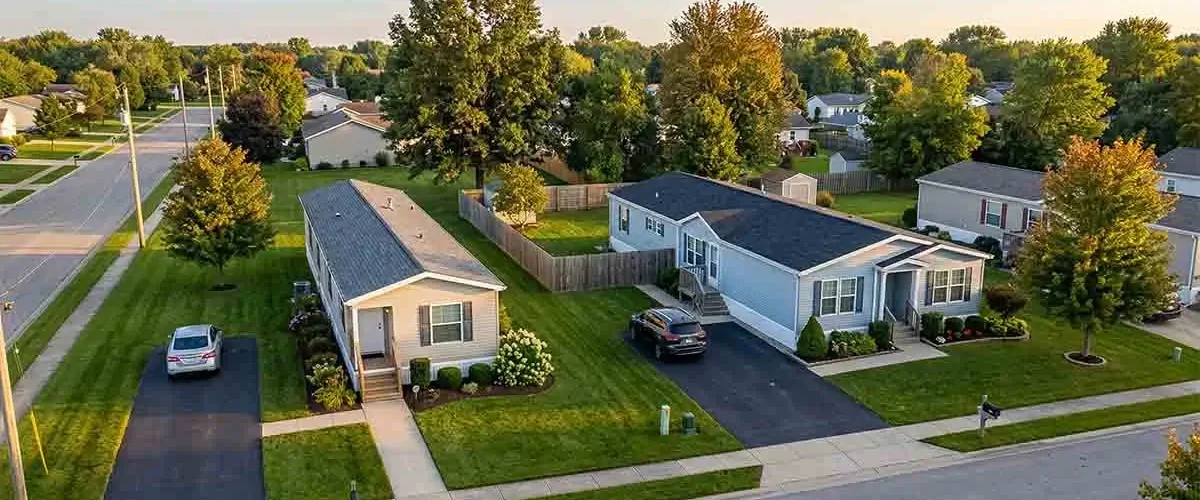
A single wide manufactured home is built as one section in a factory and transported to its site as a single unit. Single wides are typically between 14 and 18 feet wide and 52 to 80 feet long, giving a total living space of roughly 600 to 1,300 square feet.
Because single wides are one piece, they are easier to transport and can be placed in locations where a double wide might not fit — including narrower lots and some mobile home parks with tight spacing. They are the most affordable manufactured home option and are popular with singles, couples, retirees, and small families on tight budgets.
What Is a Double Wide Manufactured Home?
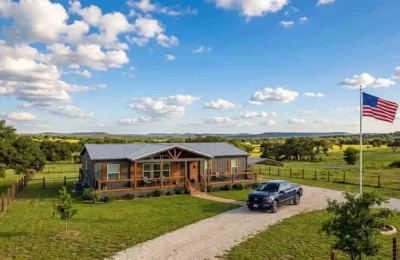
A double wide manufactured home is built as two separate sections in the factory, transported separately to the site, and then joined together. Double wides are typically 24 to 36 feet wide and 40 to 90 feet long, providing 1,000 to 2,500 square feet of living space.
When installed properly, the seam between the two sections is nearly invisible from the inside, and a double wide can feel very much like a traditional site-built home. Double wides are the preferred option for families and for buyers who want more space, more storage, and a floor plan that matches their lifestyle.
Cost Comparison: Single Wide vs. Double Wide
Purchase Price (2026 Estimates)
- Single wide (new): $50,000 to $110,000
- Single wide (used): $15,000 to $60,000
- Double wide (new): $90,000 to $200,000+
- Double wide (used): $30,000 to $120,000
These are home-only prices and do not include land, installation, utility hookups, skirting, steps, or other site costs, which can add $10,000 to $30,000 or more to the total project cost.
Monthly Costs
A double wide will cost more per month to heat and cool due to its larger square footage, though the difference is partially offset by the fact that most newer double wides are built with better insulation and energy efficiency than older single wides. Expect to pay 30 to 60 percent more per month on utilities in a double wide vs. a comparable single wide.
Space and Floor Plan Comparison
Single Wide Floor Plans
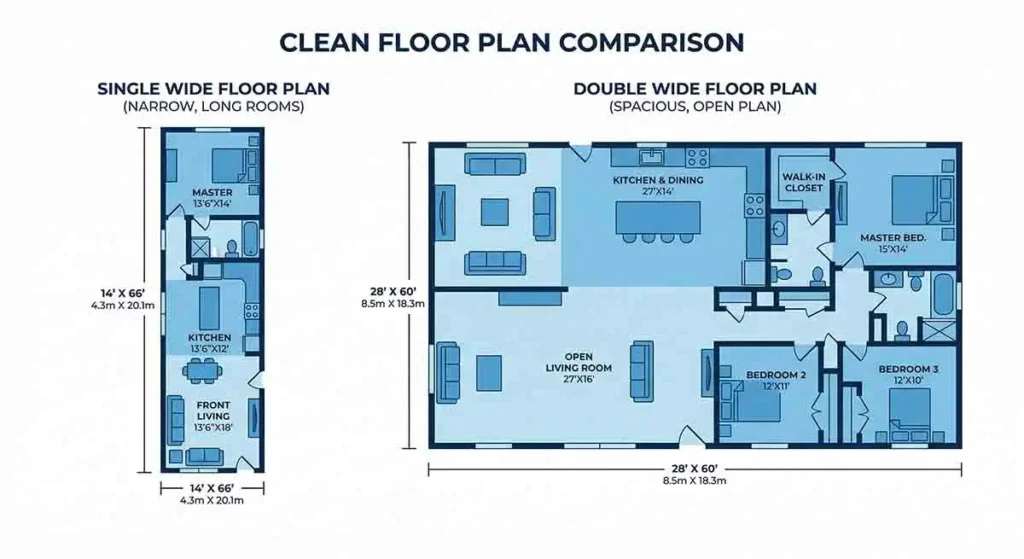
The long, narrow layout of a single wide is its biggest limitation. A typical single wide has 2 to 3 bedrooms, 1 to 2 bathrooms, a combined kitchen and dining area, a small living room, and limited storage. The narrow width means there is not much room on either side of a central hallway.
Double Wide Floor Plans
A double wide opens up dramatically more floor plan possibilities. A typical double wide has 3 to 4 bedrooms, 2 full bathrooms, a separate kitchen and dining room, a spacious living room, a master suite with ensuite bathroom and walk-in closet, and a laundry room.
Many double wides today have open floor plans, vaulted ceilings, and amenities that rival entry-level site-built homes.
Financing Differences
Single Wide Financing Challenges
Some conventional lenders and FHA programs have restrictions on financing single wide manufactured homes, particularly older ones or those in mobile home parks. Chattel lenders like 21st Mortgage and Vanderbilt Mortgage will typically finance single wides, but at higher interest rates.
Double Wide Financing Options
Double wides have more favorable financing options overall, primarily because they offer more collateral value and are more comparable to site-built homes. On owned land with a permanent foundation, double wides can qualify for FHA, VA, USDA, and even some conventional loans.
Resale Value: Single Wide vs. Double Wide
Double wides hold their value better than single wides, all else being equal. Double wides appeal to a wider pool of buyers — especially families — offer more livable space, and are more easily financed by those buyers.
This does not mean single wides are a bad investment. On owned land in a desirable location, a well-maintained single wide can hold and even grow in value. But if you are buying primarily as an investment and plan to sell in the future, a double wide is the stronger choice.
Transportation and Placement
Single wides are easier to transport because they move in one piece. They can also fit in spaces where a double wide cannot — narrower lots, tighter park spaces, and lots with limited access.
Double wides require two transport loads and a crew to join the sections on-site. The installation process is more complex and takes longer. However, once installed correctly, a double wide is just as structurally sound as a single wide — often more so because the two sections brace each other.
Which Should You Choose?
Choose a single wide if:
- You are on a very tight budget and need to minimize monthly costs
- You are a single person or couple without children
- Your lot is narrow or has space limitations
- You may need to move the home in the future
Choose a double wide if:
- You have a family with children
- You want more livable space and storage
- You plan to stay long-term and want better resale value
- You want access to better financing options
- You want a home that feels more like a traditional house
The Bottom Line
Both single wides and double wides are legitimate, practical housing options for millions of Americans. The right choice comes down to your budget, your family size, your lot situation, and your long-term plans.
Whichever you choose, focus on the fundamentals: buy on land you own if at all possible, insist on a permanent foundation, and keep up with maintenance. Those factors matter far more than whether you chose one section or two.

Rafael Medina is a two-time manufactured home buyer who went from a 611 credit score and $8,000 savings to owning two manufactured homes — one in a park and one on private land with an FHA mortgage. He writes for first-time buyers and park residents, covering the practical, real-world side of manufactured home ownership from someone who has lived every step of it.