Heating and cooling a manufactured home efficiently is one of the biggest quality-of-life and cost concerns for owners — and the right HVAC system for a manufactured home is not always the same as what works best in a site-built house. Manufactured homes have unique characteristics — smaller square footage, lower ceilings, ductwork running through unconditioned space, and varying insulation levels — that affect which systems perform best.
This guide covers every major HVAC option available for manufactured homes in 2026, with honest assessments of cost, efficiency, and suitability for different situations.
Why Manufactured Homes Need HVAC Attention
Manufactured homes — particularly older ones built before current HUD energy standards — present unique heating and cooling challenges:
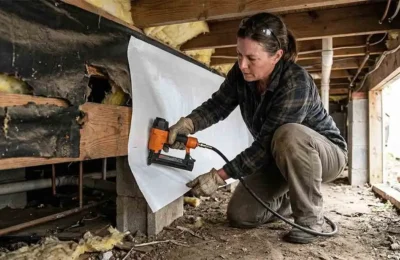
- Original ductwork often runs through the belly (unconditioned space), losing conditioned air before it reaches living areas
- Older homes have less insulation than modern buildings, requiring more HVAC capacity
- The compact floor plan means air circulation patterns are different from larger site-built homes
- Mobile park homes may have limited options for exterior unit placement
- Electrical service panels in older manufactured homes may need upgrading to support modern HVAC systems
Option 1: Central Air and Gas or Electric Furnace (Traditional Forced Air)
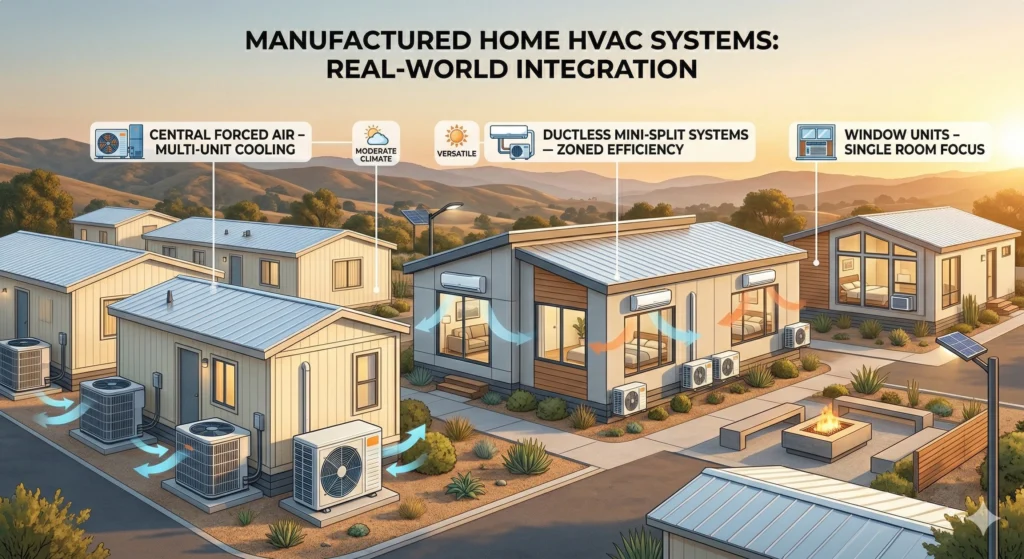
The most common HVAC setup in manufactured homes is a traditional forced-air system — a furnace (gas or electric) for heating combined with a central air conditioning unit for cooling, connected by ductwork that distributes conditioned air throughout the home.
How It Works in Manufactured Homes
Manufactured-home-specific furnaces and air handlers are designed to fit the smaller utility closets common in manufactured homes. The air handler typically sits in a dedicated closet, and ductwork runs under the floor through the belly or in the ceiling cavity (in newer homes).
Costs
- New gas furnace and central AC unit (manufactured home specific): $2,500 to $5,500 installed
- Electric furnace and central AC: $2,000 to $4,500 installed
- Annual operating cost (varies widely by climate and home insulation): $800 to $2,500+
Pros
- Familiar technology that most HVAC technicians can service
- Good for very cold climates where heat pump efficiency drops (gas furnace particularly)
- Heats or cools the entire home through the existing duct system
- Replacement parts are widely available
Cons
- Ductwork in the belly loses significant energy — can waste 20 to 30% of heating and cooling before it reaches living spaces
- Gas requires a gas line (not available on all properties)
- Less energy-efficient than heat pumps in moderate climates
- Older duct systems may need replacement or sealing to perform efficiently
Option 2: Heat Pump Systems — The Most Efficient Choice for Moderate Climates
A heat pump is a single system that provides both heating and cooling by moving heat rather than generating it. In cooling mode, it works like a standard air conditioner. In heating mode, it extracts heat from outdoor air (even cold outdoor air) and moves it inside. This makes heat pumps 2 to 4 times more efficient than electric resistance heating.
Traditional Split Heat Pump
A traditional split heat pump uses the existing duct system — the outdoor compressor unit connects to an air handler inside that distributes air through existing ductwork. This is essentially a replacement for the central forced-air system described above, using the same ductwork.
Costs
- Heat pump system (manufactured home specific): $3,000 to $6,500 installed
- Annual operating cost in moderate climate: $600 to $1,800 (typically 20 to 40% less than equivalent electric furnace and AC)
Best For
Manufactured homes in moderate climates — the Southeast, Pacific Northwest, mid-Atlantic, and similar regions where winter temperatures rarely stay below 20°F for extended periods. Heat pumps lose efficiency in extreme cold, though modern “cold climate” heat pump models maintain good efficiency down to 0°F and below.
Option 3: Mini-Split Heat Pump (Ductless) — The Premium Choice
A mini-split — also called ductless heat pump or ductless mini-split — is a heat pump system that does not require ductwork at all. An outdoor compressor connects directly to one or more indoor air handlers mounted on walls or ceilings, with refrigerant lines running through a small hole in the wall.
For manufactured homes, mini-splits offer a compelling advantage: they completely bypass the duct system, eliminating the 20 to 30 percent energy loss that occurs when conditioned air travels through belly ductwork.
Types of Mini-Split Configurations
Single-zone mini-split: One outdoor unit connected to one indoor handler. Ideal for heating and cooling a single room or an open-plan single wide home.
Multi-zone mini-split: One outdoor unit connected to two, three, or four indoor handlers in different rooms. Each zone can be independently controlled, allowing you to heat or cool only the rooms in use — a significant energy saver.
Costs
- Single-zone mini-split (12,000 to 18,000 BTU): $1,500 to $3,500 installed
- Multi-zone mini-split (2 to 4 zones): $3,500 to $8,000+ installed
- Annual operating cost: Typically 25 to 45% less than equivalent traditional forced-air systems
Pros of Mini-Splits
- No duct losses — maximum efficiency delivery of conditioned air
- Zone control — heat or cool only occupied rooms
- Very quiet operation
- No need to replace or repair existing ductwork
- Inverter technology provides smooth, consistent temperature control
- Federal tax credits available for qualifying high-efficiency mini-splits (up to 30% credit through 2032)
Cons of Mini-Splits
- Higher upfront cost than traditional systems
- Requires finding an HVAC technician experienced with mini-split installation
- Wall-mounted indoor units are visible and may not suit all aesthetic preferences
- Each zone requires refrigerant line penetrations through the wall
Option 4: Window Air Conditioners and Electric Space Heaters
Window air conditioners combined with electric space heaters or baseboard heaters represent the lowest-cost entry point for climate control in a manufactured home. While not the most efficient or comfortable solution, they serve an important role for owners on very tight budgets or in mild climates.
Costs
- Window AC unit (5,000 to 12,000 BTU): $150 to $500 each
- Electric space heater: $30 to $200
- Annual operating cost: Higher per BTU than any other option listed here
When This Makes Sense
Very mild climates, very tight budgets, temporary housing situations, or supplemental spot cooling or heating in specific rooms. Not recommended as a primary HVAC solution for full-time occupancy in climates with real winters or hot summers.
Option 5: Pellet Stoves and Wood Stoves
In rural areas with access to affordable wood or pellets, a pellet stove or wood-burning stove can serve as a primary or supplemental heating source in a manufactured home. However, installation requires careful attention to fire safety standards and HUD compliance for manufactured homes — not every stove can be installed in a manufactured home.
Always verify that any wood or pellet stove is listed for use in manufactured homes by a recognized testing laboratory (UL or equivalent) and that the installation meets HUD requirements for clearances, combustion air, and chimney systems.
Sizing Your HVAC System Correctly
Oversizing is one of the most common HVAC mistakes. An oversized system cycles on and off too frequently, reducing efficiency, increasing wear, and failing to properly dehumidify the air in humid climates.
A proper HVAC load calculation (Manual J calculation) should be performed before selecting a system size. For a typical 1,200 square foot manufactured home in a moderate climate with adequate insulation, a 2-ton (24,000 BTU) heat pump or air conditioner is often appropriate. Older, poorly insulated homes in extreme climates may need 2.5 to 3 tons.
Always have a licensed HVAC contractor perform the sizing calculation rather than relying on rules of thumb or a contractor who simply replaces the old unit with the same size.
Upgrading Existing Ductwork
If you keep a ducted system, having the ductwork inspected, sealed, and insulated is often more cost-effective than replacing the HVAC equipment. Duct sealing with mastic sealant and insulating ducts that run through the belly can recover 20 to 30 percent of currently wasted heating and cooling energy. This upgrade typically costs $300 to $1,200 and delivers rapid payback through reduced energy bills.
The Bottom Line
For most manufactured homeowners in 2026, a ductless mini-split heat pump offers the best combination of energy efficiency, comfort, and long-term value — especially if the existing ductwork is old or poorly insulated. For those who want to keep a ducted system, a high-efficiency heat pump combined with professional duct sealing and insulation delivers excellent results in moderate climates.
Whatever system you choose, proper sizing by a licensed contractor and regular maintenance are the keys to long-term performance and efficiency.

Sandy Kowalski is a self-taught manufactured home renovator who transformed a $18,500 fixer-upper into a $78,000 property through eight years of hands-on DIY work. She writes about repairs, upgrades, and budget renovations from firsthand experience — no theory, just what actually works.