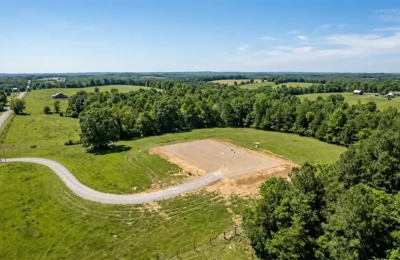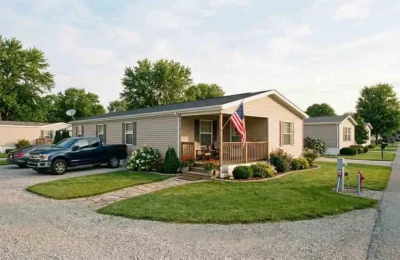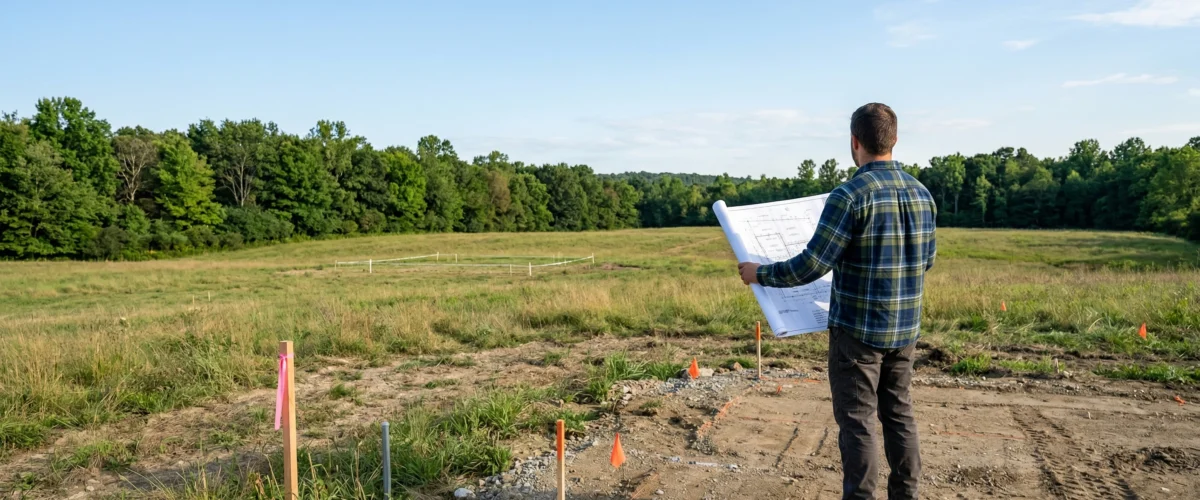
Purchasing land for a manufactured home is one of the most important financial decisions a manufactured homeowner can make — and one of the most common sources of costly mistakes. What you need to know before buying land for a manufactured home covers far more than just the purchase price of the acreage. Zoning, soil conditions, utilities, flood risk, deed restrictions, and a dozen other factors all determine whether a piece of land is truly suitable for your plans.
This guide walks through everything you need to investigate before signing a land purchase contract.
Why Land Ownership Changes Everything
Before diving into the checklist, it is worth revisiting why buying land matters so much. A manufactured home on leased land (in a mobile home park) is personal property — it depreciates, faces lot rent risk, and cannot be financed with a mortgage. A manufactured home on owned land with a permanent foundation is real property — it can appreciate, can be mortgaged, and builds equity just like a site-built home. Land ownership is the single most important variable in manufactured home financial outcomes.
Step 1: Confirm Zoning Allows Manufactured Homes
The absolute first thing to verify — before any other due diligence — is whether the local zoning allows you to place a HUD-code manufactured home on the property as a primary residence.
Contact the county or municipal planning and zoning department with the specific parcel identification number (APN) and ask directly: “Is this parcel zoned to allow the placement of a HUD-code manufactured home as a primary residential dwelling?” Get the answer in writing if at all possible.
Do not assume that rural or agricultural land automatically allows manufactured homes. Some agricultural zones have restrictions, and some rural counties have adopted overlay regulations that limit manufactured home placement. Verifying zoning takes 30 minutes and can save you from a catastrophic land purchase mistake.
Step 2: Review All Deed Restrictions and CC&Rs
Even if the zoning allows manufactured homes, private deed restrictions may prohibit them. Deed restrictions are covenants recorded in the property’s chain of title — they are binding on all future owners regardless of local zoning.
Common deed restrictions that affect manufactured home placement:
- Explicit prohibition of manufactured or mobile homes
- Requirements that only site-built construction is allowed
- Minimum square footage requirements that may or may not apply to manufactured homes
- Architectural approval requirements administered by a property owners association
Ask the title company or real estate attorney to provide copies of all recorded restrictions before you purchase. If the land is part of a subdivision or planned development, get the full CC&Rs (Covenants, Conditions and Restrictions) and read them carefully.
Step 3: Check the Flood Zone Status
Flood zone status affects everything — insurance costs, foundation requirements, and in some cases whether you can legally place a manufactured home on the property at all.
Visit the FEMA Flood Map Service Center at msc.fema.gov and enter the property address to check its flood zone designation:
- Zone X: Minimal flood risk. No special requirements. This is ideal.
- Zone AE: Special Flood Hazard Area with a 1% annual chance of flooding. Manufactured homes must be elevated above the Base Flood Elevation (BFE). This significantly increases foundation costs and requires mandatory flood insurance if you have a mortgage.
- Zone VE: Coastal high-velocity flood zone. Very challenging for manufactured home placement and typically very expensive to insure. Avoid if possible.
If the property is in Zone AE or VE, get a detailed cost estimate for a flood-compliant elevated foundation before purchasing — these systems can add $10,000 to $30,000 or more to your project cost.
Step 4: Conduct a Percolation Test (Rural Land)
If the land does not have access to a public sewer system — which is true of most rural land — you will need a private septic system for wastewater disposal. A percolation test (commonly called a perc test) determines whether the soil can absorb septic system effluent at the required rate for the number of bedrooms in your home.
Not all land passes a perc test. Clay soils, high water tables, and bedrock near the surface can all prevent adequate drainage for a conventional septic system. Land that fails a conventional perc test is not necessarily unbuildable — alternative systems like mound systems or aerobic treatment units (ATUs) may work — but these alternatives cost significantly more than conventional systems ($15,000 to $30,000 vs. $5,000 to $10,000 for conventional).
Always have a perc test performed by a licensed soil scientist or engineer before purchasing rural land. This test typically costs $300 to $600 and is absolutely non-negotiable if there is no public sewer available.
Step 5: Verify Water Source Options
Your manufactured home needs a reliable water supply. On properties with public water service, this is straightforward — connect to the municipal line at the meter. On rural properties without public water, you will need a private well.
Before purchasing rural land, research:
- Well drilling permit availability and requirements in the county
- Typical well depths and success rates in the area (the county health department or a local well driller can advise)
- Whether neighboring properties have successful wells at reasonable depth
- Water quality issues in the area (some rural areas have naturally occurring contaminants like arsenic, radon, or high iron content that require treatment systems)
Well drilling costs vary significantly by depth and geology — from $3,000 to $15,000 or more. Get a cost estimate from a local licensed well driller before finalizing your land purchase budget.
Step 6: Confirm Electric Service Availability and Cost
Electric service is available in virtually all inhabited areas of the United States, but the cost of connecting to the grid varies enormously depending on how far the land is from existing power lines. In most cases, the utility will extend service to the edge of your property at no cost if you are within a standard distance from existing lines (typically 100 to 300 feet). Longer extensions are typically charged to the property owner at rates of $5 to $25 per foot of line extension.
For very remote land, the cost of electric line extension can be prohibitive — $20,000 to $50,000 or more for a half-mile extension. Off-grid solar systems are an alternative for remote properties, but they add significant upfront cost and complexity.
Contact your local electric utility before purchasing remote land and ask for a service availability and cost estimate for the specific parcel.
Step 7: Assess Soil and Site Conditions
The physical characteristics of the land affect foundation requirements and site preparation costs:
Slope and Grading
Manufactured homes require a reasonably level site. Slopes greater than 5 percent typically require grading — cutting and filling — to create a level pad. Grading costs vary from $1,000 on a gentle slope to $20,000 or more on challenging terrain. Get a topographic survey and grading estimate if the land appears significantly sloped.
Soil Bearing Capacity
The soil must be able to support the home’s foundation without settling or shifting. Soft or organic soils may require engineered foundation solutions that significantly increase costs. A geotechnical assessment can identify soil problems before they become expensive surprises.
Access Road
The delivery of a manufactured home requires truck access — typically a road capable of supporting a 100,000+ pound loaded transport vehicle. If the property does not have adequate road access, you may need to build or improve a driveway before delivery. The home cannot be placed if the transport truck cannot reach the site.
Step 8: Verify Property Lines and Legal Access
Before purchasing any land, confirm:
- The property boundaries are clearly marked or surveyed
- The property has legal access to a public road — either direct frontage or a recorded easement across neighboring land
- Any easements on the property (utility easements, pipeline easements, drainage easements) do not conflict with your planned home placement location
A boundary survey costs $500 to $2,000 depending on parcel size and is worthwhile for any rural land purchase where boundaries are unclear or disputed.
Step 9: Research Local Permit Requirements
Even after confirming that zoning allows your manufactured home, you will need permits for the foundation, utility connections, and potentially the home placement itself. Contact the county building department to understand:
- What permits are required for manufactured home placement
- Whether a certified engineer foundation inspection is required
- Setback requirements (minimum distances from property lines and roads)
- Timeline for permit approval in your county
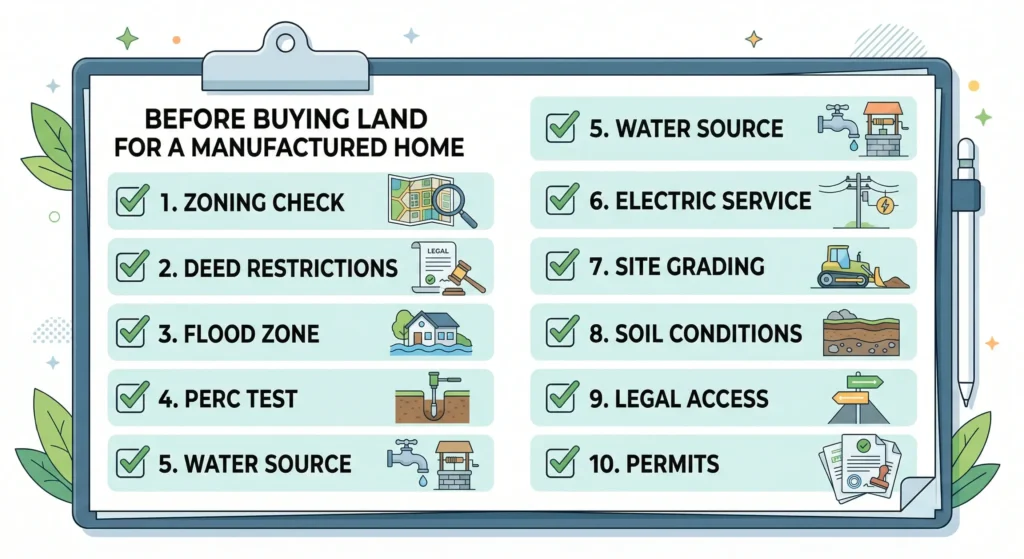
Pre-Purchase Land Checklist Summary
- Zoning confirmed to allow manufactured homes — in writing
- Deed restrictions reviewed — no prohibition on manufactured homes
- Flood zone checked at msc.fema.gov — Zone X preferred
- Perc test completed (if no public sewer)
- Well drilling feasibility confirmed (if no public water)
- Electric service extension cost estimated
- Site grading requirements and costs estimated
- Soil conditions assessed
- Legal access to public road confirmed
- Permits and setbacks researched with county building department
The Bottom Line
Buying land for a manufactured home requires significantly more due diligence than buying land for a site-built home in a developed subdivision. Rural land in particular can have a long list of physical and legal conditions that either add cost or make the site unsuitable entirely.
Work through this checklist before making any land purchase offer — ideally make the purchase contract contingent on satisfactory results from percolation tests, utility availability confirmation, and zoning verification. This protects your earnest money if serious problems emerge during due diligence.